
When a MacBook Pro Can No Longer Stay Connected
Wi-Fi problems can appear in several ways. A MacBook Pro may stop detecting wireless networks, connect and disconnect repeatedly, show a weak connection where other devices work normally, or recognize a network but fail to maintain reliable communication.
Those symptoms do not automatically identify the Wi-Fi card as the failed part. The wireless connection depends on hardware inside the MacBook Pro, antenna connections, macOS configuration, and the network being used. Separating those possibilities is important before replacing components or changing settings unnecessarily.
Start With What the MacBook Pro Is Actually Doing
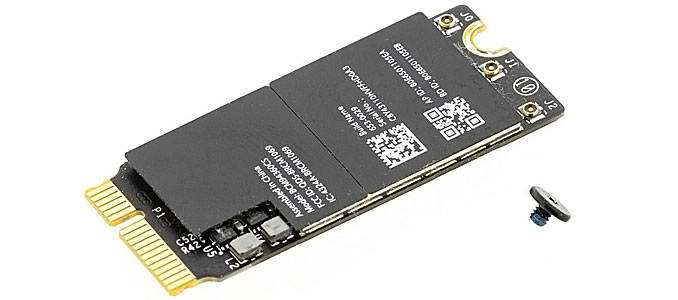
Testing the complete wireless path helps distinguish a defective card from another condition producing the same visible symptom.
Different Wi-Fi Failures Leave Different Clues
Wireless problems are easier to evaluate when the exact behavior is considered instead of treating every connection failure as the same condition. Whether networks disappear completely, signal strength changes, or a connection drops only under certain circumstances can provide useful direction for the next diagnostic step.
A precise description of the Wi-Fi behavior can reveal more than simply knowing that the MacBook Pro will not connect.
A Working Wi-Fi Card Still Needs a Reliable Signal Path
Wireless communication does not begin and end at the Wi-Fi card. Antenna connections inside the MacBook Pro provide the path needed to transmit and receive radio signals, making their condition important when wireless performance becomes weak or unreliable.
A loose, damaged, or improperly connected antenna can produce symptoms that resemble a failing Wi-Fi card. Networks may remain visible but appear weaker than expected, connection quality may change unexpectedly, or wireless performance can become inconsistent even though the card itself is still operating.
That distinction becomes especially important when the MacBook Pro has previously been opened for another repair. Internal work around the wireless hardware can leave an antenna connection disturbed without creating an obvious external sign.
Three Areas Worth Separating
Looking at the antenna path separately from the Wi-Fi card helps prevent one wireless component from being blamed for a failure occurring somewhere else in the same system.
Before Replacing the Wi-Fi Card, Confirm What Has Failed
A replacement card becomes useful only when the existing wireless hardware has been identified as the source of the problem. Before reaching that point, the card can be considered together with its physical installation, antenna connections, recognition by the MacBook Pro, and the wireless symptoms already observed.
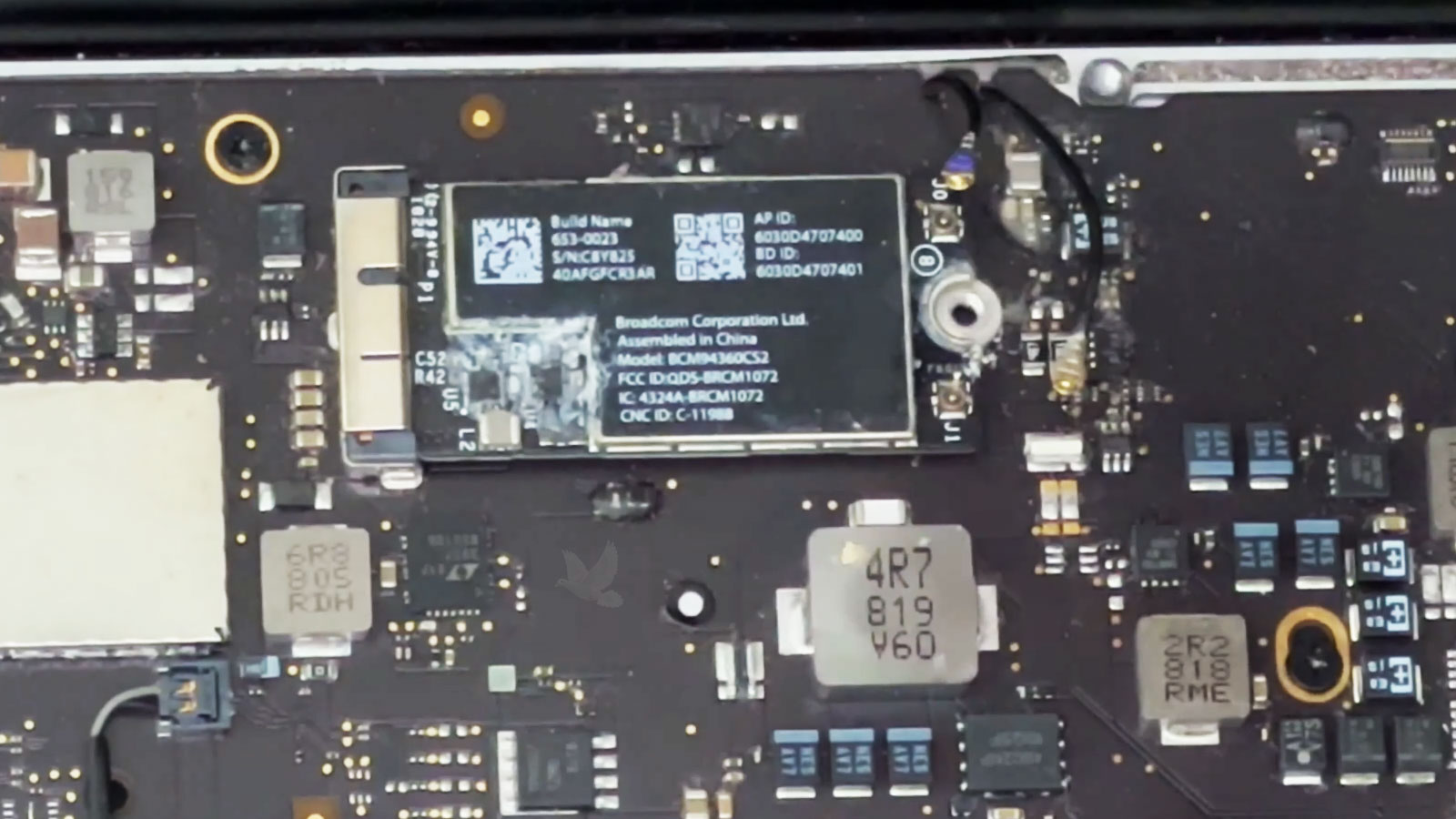
A Wi-Fi card should be replaced because testing points to the card, not simply because the MacBook Pro has a wireless problem.
This distinction keeps the repair focused. If the card is functioning normally, attention can remain on the antenna path, connections, software configuration, or another part of the wireless system. If the card itself is responsible, replacement can proceed with a clear reason for changing the component.
Not Every Wi-Fi Problem Begins With Hardware
When the wireless card and its connections are functioning, the investigation can move into macOS and the network configuration. Stored network information, software settings, or a problem limited to one wireless network can create symptoms that appear surprisingly similar to hardware failure.
Separating Configuration From Component Failure
Software-related troubleshooting should remain focused on the behavior being investigated. The objective is not to reset every preference on the MacBook Pro, but to determine whether something within the existing wireless configuration is preventing an otherwise functional Wi-Fi system from operating normally.
macOS retains information about wireless networks that have been used previously. When a particular network develops a connection problem while others continue working, its stored configuration can be examined rather than immediately treating the MacBook Pro as having a hardware failure.
Testing more than one known wireless network helps establish whether the symptom follows the MacBook Pro or remains limited to a particular router or network environment. A failure that occurs in only one location provides a very different diagnostic direction from one that follows the computer everywhere.
When the Wi-Fi hardware remains detected but wireless operation becomes abnormal after a system or configuration change, the software side can be evaluated before internal components are replaced. The relevant settings can be corrected while leaving unrelated configuration alone.
Replacing the Wireless Card Is a Precise Hardware Repair
Once the existing Wi-Fi card has been identified as the failed component, replacement shifts the focus from diagnosis to careful installation. The new card has to occupy the correct position, connect properly with the MacBook Pro, and restore the antenna relationships required for normal wireless operation.
The retaining screw shown with the replacement card in our first image has a simple but important purpose. After the card is inserted into its intended connection, the screw secures the component so it remains correctly positioned inside the computer.
The antenna connections also have to return to their proper locations. Restoring the card without restoring those connections correctly could leave the MacBook Pro with weak or incomplete wireless performance even though a new component has been installed.
Replacement is complete only when the new hardware is secure, connected, recognized, and able to communicate normally.
Wireless Performance Should Remain Reliable During Normal Use
Detecting a network after repair is only the first confirmation. The MacBook Pro should also establish a connection normally, maintain that connection, receive an appropriate signal, and continue communicating as the computer is used. Looking at those behaviors together provides a more complete picture of the finished Wi-Fi repair.
Network Detection
Available wireless networks should appear normally without repeated attempts to make the MacBook Pro recognize nearby Wi-Fi signals during use.
Connection
The MacBook Pro should join a known network successfully and remain connected without immediately dropping or repeatedly reconnecting.
Signal
Wireless reception should be reasonable for the location and can be compared with other devices when an unusually weak signal was part of the original problem.
Communication
Normal network activity should continue after connection so the test confirms usable wireless communication rather than merely the appearance of a connected Wi-Fi status.
The repair is not finished simply because the Wi-Fi icon returns. The connection needs to remain useful and stable during actual operation.
When network detection, connection stability, reception, and communication all behave normally together, the original wireless symptom can be compared against the repaired MacBook Pro before the service is considered complete.
Restore the Wireless Connection Without Guessing at the Cause
MacBook Pro Wi-Fi problems can begin with the wireless card, antenna connections, internal connectors, macOS configuration, or the network environment itself. Identifying which part of that path is responsible allows the repair to address the actual failure instead of replacing hardware simply because the visible symptom involves Wi-Fi.
When the wireless card has failed, replacement can restore the internal hardware needed for normal connectivity. If testing instead points toward an antenna connection, installation problem, or software-related condition, attention can remain there without changing a functional card.
MacBook Pro Wi-Fi service is available in Miami for systems that no longer detect networks, repeatedly disconnect, experience abnormal signal strength, or otherwise fail to maintain the wireless connection expected during everyday use.
Pickup and return within Miami can be handled as part of the repair without an added transportation charge. Service can also extend beyond Miami when needed, with any additional travel cost based on the extra distance involved.
Get Back to a Stable Wi-Fi Connection
The goal is straightforward: restore dependable wireless operation while changing only the hardware or configuration that actually needs attention.