
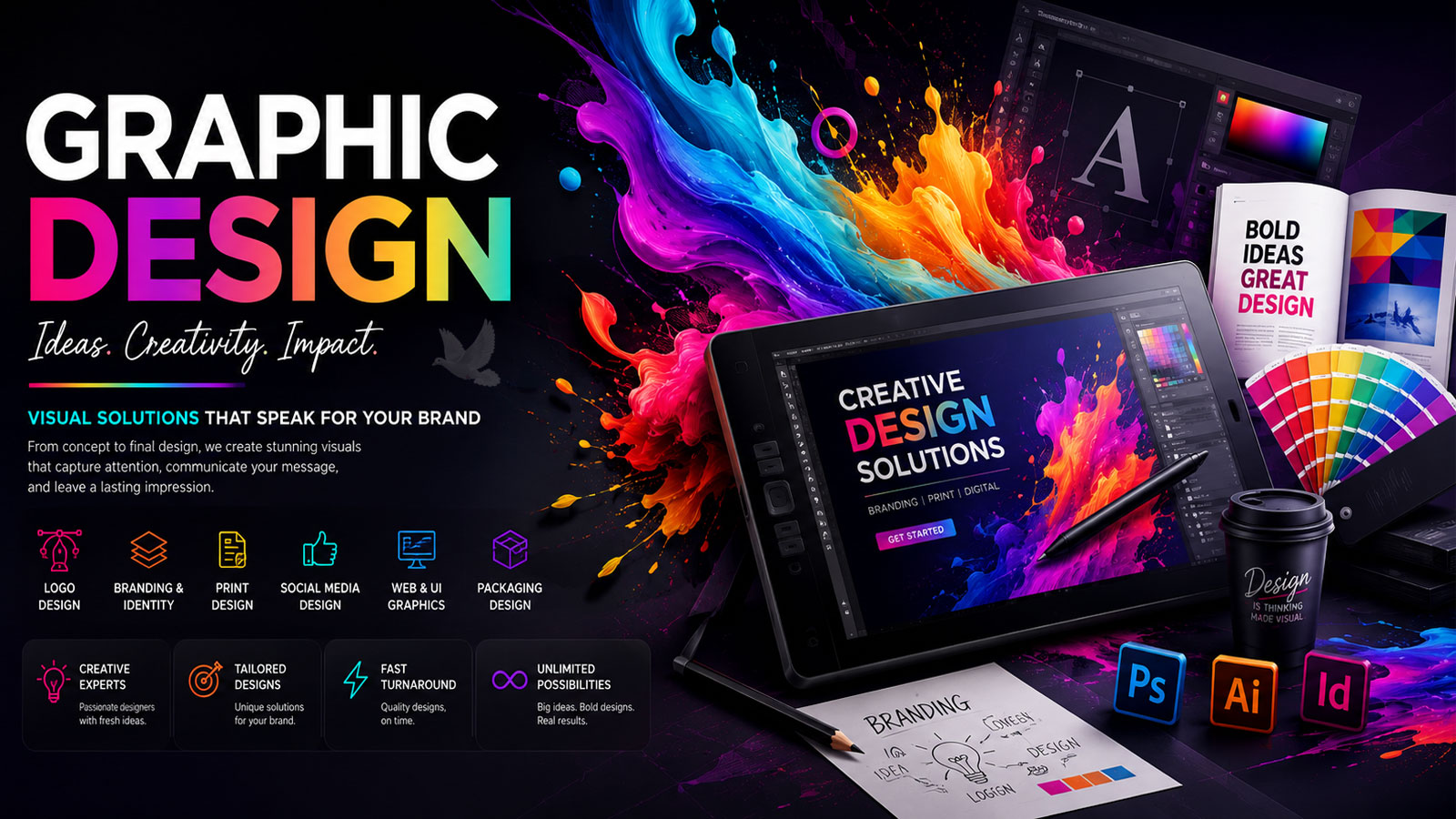
Graphic Design for Business, Print, and Digital Media
Graphic design turns ideas and information into visual material that can be understood, recognized, and used for a specific purpose. Typography, imagery, color, spacing, composition, and layout all contribute to how a design communicates before a person reads every word it contains.
The appropriate design depends on where the finished artwork will appear and what it needs to accomplish. A logo, flyer, business card, digital advertisement, social media graphic, printed piece, presentation asset, or website graphic may share the same visual identity while requiring very different dimensions, proportions, levels of detail, and methods of preparation.
Good graphic design is therefore not simply a matter of making something attractive. The visual choices need to support the message, organize the information, and produce artwork that remains clear and usable in the environment for which it was created.
One Design Discipline, Many Different Applications
Graphic design can serve very different purposes depending on what needs to be communicated and where the finished work will appear. Some projects establish identity, others organize detailed information, and others are created specifically to attract attention or support a promotion.
Brand and Identity Design
Logos, visual marks, color selections, typography, and supporting brand elements help establish a recognizable visual identity. These pieces need to work together rather than appearing as unrelated graphics created at different times.
The finished identity should also remain practical across different uses, from websites and digital graphics to documents, signage, promotional material, and printed pieces.
Business and Print Design
Business cards, flyers, brochures, menus, signs, presentation materials, and other printed pieces require careful organization of text and imagery. Information has to remain readable while still creating a deliberate visual hierarchy.
Size, margins, image quality, typography, and final output requirements also matter because artwork intended for print must be prepared for the physical format in which it will appear.
Digital and Promotional Graphics
Website graphics, banners, advertisements, social media artwork, promotional images, and other digital assets are designed for screens where dimensions, placement, readability, and visual impact can change considerably between platforms.
These graphics can follow an existing visual identity or be developed for a particular campaign, promotion, announcement, product, service, or other communication that needs its own presentation.
Typography and Hierarchy
Type does more than display words. Font selection, size, weight, spacing, and placement help establish which information should be noticed first and how the viewer moves through the content.
A clear hierarchy separates headlines, supporting information, details, and calls to action without requiring every element to compete for the same amount of attention.
Every Element Has to Work as Part of the Composition
A finished design is built from individual decisions that affect one another. An image may be strong on its own, a typeface may be appropriate, and a color palette may fit the subject, but those pieces still have to function together within the available space.
Composition determines how that material is arranged. Alignment, proportion, contrast, spacing, scale, and visual balance influence where attention goes and whether the information feels organized or crowded.
The objective is not to fill every available area. Empty space can be just as important as the elements placed inside it, giving information room to breathe and helping important content stand apart from supporting details.
Color and Imagery
Color can establish contrast, reinforce identity, separate information, or influence the overall character of a design. Its role should support the composition rather than overwhelm the message.
Photography, illustrations, graphics, textures, and other visual material also need to fit the purpose of the piece and maintain enough quality for the size and medium in which they will appear.
A Design Starts With What It Needs to Accomplish
Before colors, fonts, images, or layouts are selected, the purpose of the project needs to be understood. What is being communicated, who needs to see it, where the design will appear, and what action or impression it should create all influence the direction of the finished work.
Existing branding may also establish requirements that the new design needs to follow. Logos, colors, typography, imagery, previous materials, and other recognizable elements can provide continuity when a project belongs to an established visual identity.
From there, the information and visual material can be organized around the format being created. A business card presents a very different amount of information from a brochure, while a social media graphic has different proportions and viewing conditions from a printed flyer or large sign.
The design develops by refining those decisions together rather than treating them as isolated choices. Layout, typography, imagery, color, spacing, and scale are adjusted until the composition communicates clearly and fits the intended use.
Practical requirements also shape the final result. A design may need to accommodate specific dimensions, existing content, printing limitations, digital placement, or other production requirements, so those conditions should remain part of the design process from beginning to end.
Design Process
Where the Design Will Be Used Changes How It Should Be Built
The same artwork cannot always be prepared once and used everywhere without adjustment. A design intended for a website, social media platform, printed flyer, business card, presentation, sign, or other format may require different dimensions, proportions, image quality, and methods of preparation.
Digital graphics are generally viewed on screens and often need to fit predetermined spaces. A banner may be extremely wide, a social media graphic may be square or vertical, and a website image may need to remain clear while also being appropriately sized for online use.
Print introduces another set of considerations. The physical dimensions of the finished piece, image resolution, margins, bleed, color preparation, and the requirements of the printer can affect how artwork should be constructed and exported.
This is why the intended destination should be considered during the design itself rather than only when the project is finished. Building around the final use helps prevent important text from being cropped, images from losing quality, or a composition from becoming ineffective when transferred to another size.
Adapting artwork for multiple destinations may also require more than simply changing the dimensions. When the proportions change significantly, text, imagery, spacing, and other elements may need to be rearranged so the composition remains balanced and the most important information continues to receive the appropriate emphasis.
Planning for those variations early can make the finished design considerably more versatile. Instead of forcing one composition into every available space, related versions can preserve the same visual identity while allowing each piece to work naturally within the dimensions and requirements of the medium where it will appear.
The Finished File Matters Too
Different uses can require different types of finished files. The appropriate format depends on whether the artwork needs to be displayed online, printed, enlarged, placed over another background, edited later, or supplied to another service for production.
| Requirement | Common Consideration |
|---|---|
| Digital graphics | Dimensions and file size |
| Printed material | Resolution and production setup |
| Transparent artwork | Background transparency |
| Logos and scalable graphics | Ability to resize cleanly |
| Photography | Image quality and compression |
| Future editing | Editable source material |
A project may therefore require more than one finished version. Preparing artwork for its actual destinations makes the design easier to use without relying on one file to serve purposes for which it was never created.
Not Every Graphic Design Project Starts With a Blank Page
Some projects begin with nothing more than an idea, while others already have a logo, previous design, photograph, document, advertisement, or other visual material that needs to be improved, updated, adapted, or incorporated into something new.
Creating Something New
A new project provides the opportunity to establish the visual direction from the beginning. The content, purpose, audience, dimensions, and intended use can guide decisions about typography, color, imagery, composition, and the overall character of the design.
Starting fresh does not necessarily mean ignoring everything that already exists. A business may have established colors, a website, signage, photographs, or other recognizable material that should influence the new work even when there is no formal brand system to follow.
The objective is to create artwork that belongs to the organization or purpose it represents rather than simply applying a visual style because it happens to be popular. The design should have enough flexibility to remain useful beyond a single isolated piece whenever the project requires it.
Working With Existing Artwork
Existing material can provide a starting point when a design needs to be revised rather than replaced completely. Text may need to change, information can become outdated, imagery may need replacement, or the overall composition may no longer work well for its current use.
Artwork may also need to be adapted into another format. A design originally created for one size or medium can require changes to hierarchy, proportions, spacing, and placement when it is prepared for a different destination rather than simply being stretched or reduced.
In other cases, the challenge is the quality or condition of the available material. Low-resolution images, incomplete files, flattened artwork, missing elements, or older graphics can affect what can reasonably be reused and what should instead be recreated or rebuilt.
Whether the project begins from scratch or from something that already exists, the important question is what should remain, what needs to change, and what the finished design needs to accomplish.
Design Projects Can Include
Graphic Design for Business, Print, and Digital Use
Graphic design needs can range from one individual piece to a collection of related materials. A business may need a new logo and supporting identity graphics, while another project may involve a flyer, website banner, advertisement, presentation graphic, menu, or existing piece that needs to be redesigned.
Individual projects can also serve very different purposes. Some designs need to introduce a business or service, some organize detailed information, and others support a promotion, event, product, announcement, or specific call to action. The structure and visual emphasis should reflect that purpose.
When several pieces belong together, visual consistency becomes increasingly important. Typography, colors, imagery, spacing, and other recognizable elements can carry across different materials without requiring every design to have exactly the same composition.
Existing artwork can also be incorporated when appropriate. Logos, photographs, product images, illustrations, text, previous promotional material, or other supplied assets can become part of a new composition when their quality and format are suitable for the intended result.
Projects intended for multiple destinations can be prepared in related versions rather than forcing one layout into every size. A promotional design, for example, may need separate arrangements for a printed piece, website placement, and social media while maintaining the same message and visual direction.
The specific deliverables ultimately depend on what needs to be created and where the artwork will be used. Establishing those requirements before the work is finalized helps ensure that the finished files are useful beyond simply looking correct on the design screen.
Turn the Idea Into Finished Artwork
A graphic design project can begin with a complete concept, an existing piece that needs improvement, or simply an idea that still needs a visual direction. What matters first is understanding what needs to be created, where it will be used, and what the finished design needs to communicate.
From individual graphics to coordinated business materials, the design can be developed around the content, dimensions, visual identity, and technical requirements of the final use. Existing logos, photographs, text, branding, or other material can also be incorporated when the project calls for it.
Have a Graphic Design Project in Mind?
Tell us what you need designed, what material you already have, and where the finished artwork will be used.