
Mac Motherboard and Logic Board Repair
Motherboard problems in a Mac can affect power, charging, startup, connectivity, and the operation of components throughout the computer. A failed logic board does not necessarily mean the entire board has to be replaced. In many cases, the fault can be traced to a specific circuit, component, connection, or damaged area of the board.
Mac motherboard repair begins with determining exactly where the failure exists. Careful board-level diagnostics make it possible to isolate the cause before deciding whether component-level repair, microsoldering, circuit restoration, or another corrective procedure is appropriate. The objective is to repair the actual fault whenever the condition of the logic board makes a reliable repair possible.
A Logic Board Fault Can Affect Very Different Parts of a Mac
A Mac logic board contains multiple circuits responsible for power distribution, charging, communication, input and output, and the operation of components connected throughout the computer. Because these functions are interconnected on the board, different failures can produce very different symptoms.
None of these symptoms alone confirm that the motherboard is defective. The purpose of board-level diagnosis is to determine whether the failure actually originates on the logic board and, if it does, identify the specific area responsible before any repair is attempted.
Finding the Fault Before Repairing the Board
Motherboard diagnosis becomes more precise once the failure has been narrowed to the logic board. Instead of treating the board as one replaceable component, the investigation moves into the individual circuits and components responsible for the affected function.
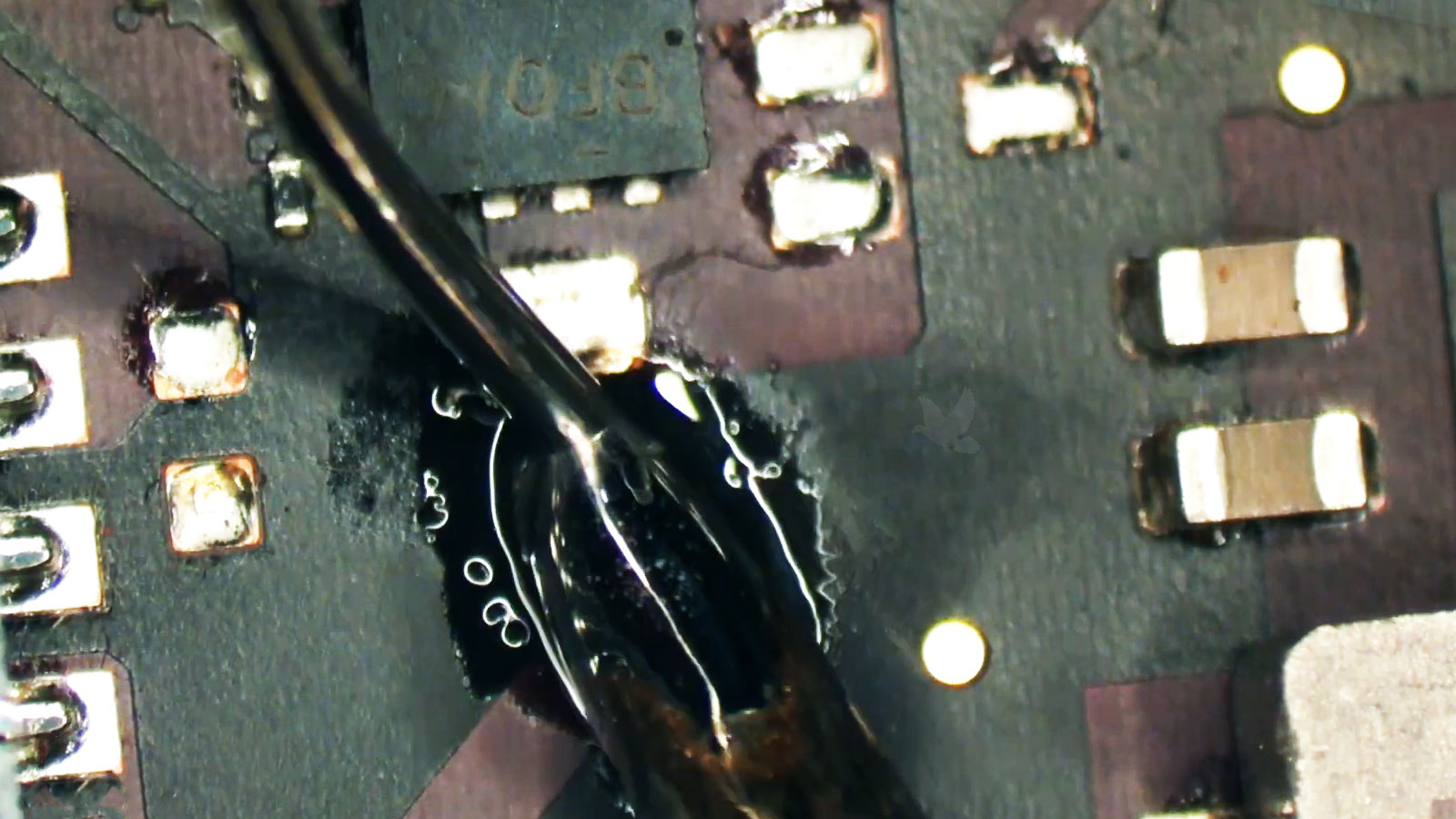
Electrical measurements can reveal missing or abnormal voltages, shorted power lines, excessive resistance, failed components, or areas of the board that are not behaving as expected. Visual inspection can also expose corrosion, burned components, damaged connectors, broken solder joints, or previous repair attempts that may be contributing to the failure.
The diagnostic path depends on what the board is doing. A Mac with no power requires a different investigation from one that powers on but has a failed port or an intermittent circuit. Measurements and observations from each stage determine where testing should continue rather than replacing components based on symptoms alone.
Once the defective circuit or damaged area has been isolated, it becomes possible to determine whether the existing logic board can be repaired reliably and what type of board-level work will be required.
Repairing the Failure at Component Level
When a logic board fault can be isolated and the surrounding circuitry remains suitable for repair, the damaged area can often be serviced directly. Board-level repair focuses on restoring the failed circuit while preserving the rest of the original motherboard rather than replacing a complete board because of one localized defect.
Damaged Components
Shorted, burned, corroded, electrically failed, or otherwise defective components can be removed once testing has established that they are responsible for the circuit failure. The surrounding board must also be inspected for damage before a replacement is installed.
Pads and Connections
Liquid damage, excessive heat, physical damage, or previous repair attempts can leave solder pads, traces, vias, or connections compromised. Where repairable, these areas must be restored so the circuit has the electrical continuity and physical integrity it requires.
Component Replacement
Replacement components must be correctly positioned and soldered without damaging nearby parts or the board itself. Fine-pitch components and densely populated areas may require microscope-assisted microsoldering and controlled heating techniques.
Electrical Testing
Replacing a failed component is not enough by itself. The repaired area should be measured again to confirm that the original electrical fault has been removed and that the affected circuit is behaving normally before the Mac is fully reassembled.
Liquid Damage at Board Level
Liquid exposure can create several different types of damage on a Mac logic board. The immediate failure may occur when conductive liquid reaches energized circuitry, but damage can also continue afterward as contamination and corrosion affect components, solder joints, traces, and electrical connections.
The condition of the board therefore matters as much as the original spill. Some affected areas remain localized and repairable, while extensive corrosion or damage across multiple circuits can make restoration considerably more difficult.
When liquid bridges points that should remain electrically isolated, current can travel through an unintended path. This can prevent startup, disturb a power rail, damage components, or cause abnormal current draw. Locating the affected circuit and determining what was damaged by the event is part of the board-level diagnosis.
Residue left on the logic board can attack component terminals, solder joints, pads, traces, and other conductive surfaces. Corrosion may be immediately visible or develop around very small components and connections where the damage is difficult to recognize without magnification.
Cleaning contamination is important, but cleaning alone does not repair components, traces, or connections that have already been electrically or physically damaged. Those failures must be identified and corrected separately.
When the affected area remains repairable, damaged connections may need to be reconstructed before replacement components can function correctly. The feasibility of that work depends on how much of the original board structure remains intact.
The presence of liquid damage does not automatically determine whether a logic board can or cannot be repaired. The decision depends on where the liquid reached, what circuitry was affected, how much damage developed, and whether the board can be restored to reliable operation.
When Power Problems Originate on the Logic Board
Power problems are not limited to a Mac that is completely dead. The logic board contains circuits that receive incoming power, regulate voltages, manage charging, and distribute power to different parts of the computer. A fault anywhere along that path can change how the Mac starts, charges, or behaves under load.
Determining whether the problem actually exists on the logic board requires electrical testing. Batteries, adapters, ports, and other external factors may produce similar symptoms, so the board should not be treated as defective until those possibilities have been separated from an internal circuit failure.
| What the Mac Does | Possible Board-Level Condition | What Testing Needs to Establish |
|---|---|---|
| Shows no response to power | Incoming power is not reaching or progressing through the required board circuits | Where the expected power sequence stops and whether a short, failed component, or missing voltage is responsible |
| Connects to power but does not charge correctly | Charging-control or power-management circuitry may not be operating normally | Whether charging voltage, current behavior, communication, and related board circuits are functioning as expected |
| Starts intermittently or shuts down unexpectedly | A power rail or regulating circuit may become unstable under certain conditions | Whether required voltages remain stable during startup and normal operation |
| Draws abnormal current | A component or circuit may be shorted, overloaded, or electrically damaged | Which rail or section of the board is producing the abnormal load |
| One onboard function loses power while the Mac otherwise works | A localized supply or control circuit may have failed | Whether the affected section is receiving the voltage and signals required for operation |
A motherboard repair should address the circuit causing the abnormal electrical behavior, not simply the visible symptom. Once the failed area is identified, the repair can be directed at the components or connections responsible for restoring normal power operation.
A Mac With No Power Is a Starting Point, Not a Diagnosis
When a Mac shows no visible response to the power button, it can appear as though the entire motherboard has failed. Electrically, however, the difference between a completely dead logic board and one localized fault can be very small. A single shorted component, missing power rail, damaged connection, or failure within an essential control circuit can prevent the startup sequence from progressing.
The diagnostic process begins by determining whether power is reaching the logic board and what happens to it once it arrives. Expected voltages and electrical conditions can then be followed through the relevant stages to identify where normal operation stops.
If a required power rail is missing, the next question is why. If abnormal resistance or current draw is present, the affected circuit has to be isolated. If initial power conditions are normal, diagnosis continues further into the sequence rather than assuming that the motherboard is beyond repair.
This distinction matters because a Mac that appears completely dead may still have a repairable logic board. Repairability depends on the actual failure and condition of the board, not on how severe the symptom appears from the outside.
“No power” describes what the Mac is doing. It does not identify what failed.
Diagnosis turns that symptom into a specific electrical problem that can be evaluated for repair.
Repair the Logic Board or Replace It?
A motherboard failure does not automatically require a complete replacement board. Once the defective area has been identified, the condition and extent of the damage can be evaluated to determine whether repairing the original logic board is a reasonable option or whether replacement makes more sense.
Repairing the Original Logic Board
Board-level repair can make sense when the failure is localized and the surrounding motherboard remains in suitable condition. Instead of replacing every circuit and component on the board because one area has failed, the defective components or connections can be repaired directly.
Keeping the original logic board also avoids introducing a different board when replacement is unnecessary. The decision, however, should depend on whether the existing board can be restored reliably, not simply on whether a temporary repair can make the Mac turn on.
When Board Replacement Makes More Sense
Some logic boards are too extensively damaged for component-level repair to be the appropriate solution. Severe corrosion, widespread electrical damage, damaged board structure, previous unsuccessful repair attempts, or multiple compromised areas can change what is technically reasonable.
In those situations, continuing to repair individual faults may not provide a dependable result. The condition discovered during diagnosis should determine whether replacement is the better option rather than forcing a board-level repair simply because it is possible to attempt one.
The objective is not to favor repair or replacement in advance. It is to determine which approach provides a technically sound solution for the condition of that particular logic board.
A Motherboard Repair Is Not Finished When the Mac Simply Turns On
Restoring power or correcting the original symptom is an important milestone, but it does not by itself confirm that a logic board repair is complete. The repaired circuit and the functions affected by the original failure need to be checked under normal operating conditions.
Electrical measurements can be repeated after the repair to verify that abnormal conditions identified during diagnosis have been corrected. The Mac can then be reassembled and operated long enough to confirm stable startup, charging, power behavior, and any specific function associated with the repaired area.
Intermittent motherboard faults may require additional observation because a problem that appears resolved immediately after repair can sometimes return as the board warms, cools, or remains in operation. When the original failure occurred only under particular conditions, those conditions should be reproduced whenever practical during final testing.
Testing Beyond the Initial Startup
Reliable operation after testing is what confirms the board-level repair has actually resolved the original fault.
Have the Mac Logic Board Properly Diagnosed
A Mac with a suspected motherboard failure does not need to be written off before the board has been properly evaluated. Whether the computer has stopped powering on, developed an electrical fault, suffered board-level liquid damage, or has a malfunction isolated to a particular circuit, diagnosis can determine what has failed and whether the original logic board can be repaired.
Mac motherboard and logic board repair is available for supported models when component-level work provides an appropriate path forward. The condition of the board is evaluated first, the failure is identified, and the repair options can then be determined from what the motherboard actually requires.