
Board-Level Faults
A logic board problem can interrupt power, charging, startup, communication between components, or other functions controlled by circuitry on the board.
Logic Board Problems Require Circuit-Level Diagnosis
The logic board connects and controls many of the systems a MacBook Pro depends on. When a fault develops within that circuitry, replacing unrelated parts does not address the actual problem. The failure may involve an individual component, a damaged connection, an abnormal power rail, or a circuit that is no longer producing the electrical conditions the MacBook Pro needs.
Logic board repair begins by narrowing the failure to the affected area and determining what is happening electrically. Measurements, board inspection, schematics when applicable, and component-level testing can then guide the repair toward the failed circuit instead of treating the entire logic board as one replaceable part.
Find the Actual Failure
Symptoms provide a starting point, but measurements on the board help determine where normal electrical behavior stops and the fault begins.
One Logic Board Contains Many Interdependent Circuits
A MacBook Pro logic board is not a single electrical system that simply works or fails as a whole. Power regulation, charging, communication, data handling, and numerous supporting functions depend on separate circuits that interact with one another. A failure in one area can therefore prevent another part of the computer from operating even when that second area is not damaged.
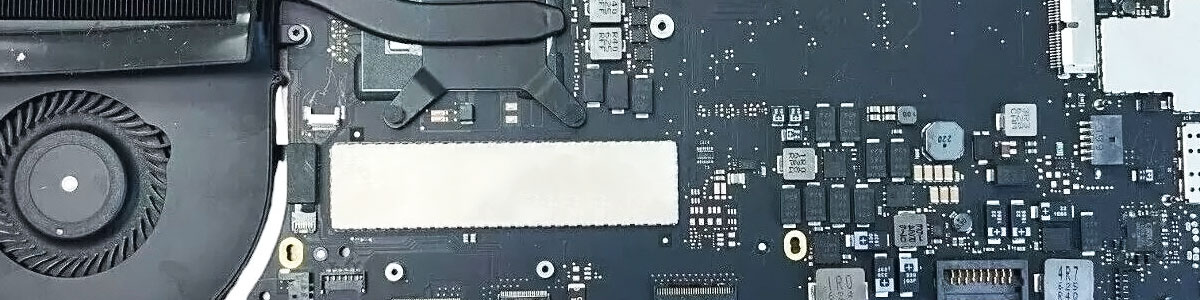
Understanding which circuit is responsible for the failed function helps narrow the investigation before component removal or replacement begins.
The Symptom Is a Clue, Not the Diagnosis
A MacBook Pro that will not start does not automatically have one particular failed chip. The same applies to charging faults, unstable operation, missing functions, or a board that appears completely unresponsive. Different circuit failures can produce similar behavior because so many functions depend on electrical conditions established elsewhere on the logic board.
The reported problem helps establish where testing should begin. From there, measurements can narrow the search until the abnormal circuit or connection is identified.
Diagnose from the circuit backward, rather than choosing a component from the symptom alone.
Electrical Measurements Narrow the Search
Logic board diagnosis becomes more precise as each measurement eliminates possibilities and points toward the next place to test. Instead of replacing components until the MacBook Pro begins working, the investigation can follow the electrical behavior of the affected circuit and determine where expected conditions change.
The smaller the diagnostic area becomes, the more targeted the eventual repair can be.
When the Failed Component Has Been Identified
Once testing provides evidence that a particular component is responsible for the fault, the work changes from diagnosis to board-level repair. ICs and other surface-mounted components are attached directly to the logic board, so replacing them requires controlled work around densely packed circuitry.
Removing an IC Without Damaging the Board
Hot-air rework allows heat to be concentrated around the component until its solder connections can be released. Temperature, airflow, positioning, and the surrounding components all matter during removal. Excessive or poorly controlled heat can create additional problems instead of correcting the original failure.
After removal, the exposed area can be examined and prepared for the replacement component. Pads and nearby connections need to remain intact so the new part can be installed correctly and the circuit can be tested again afterward.
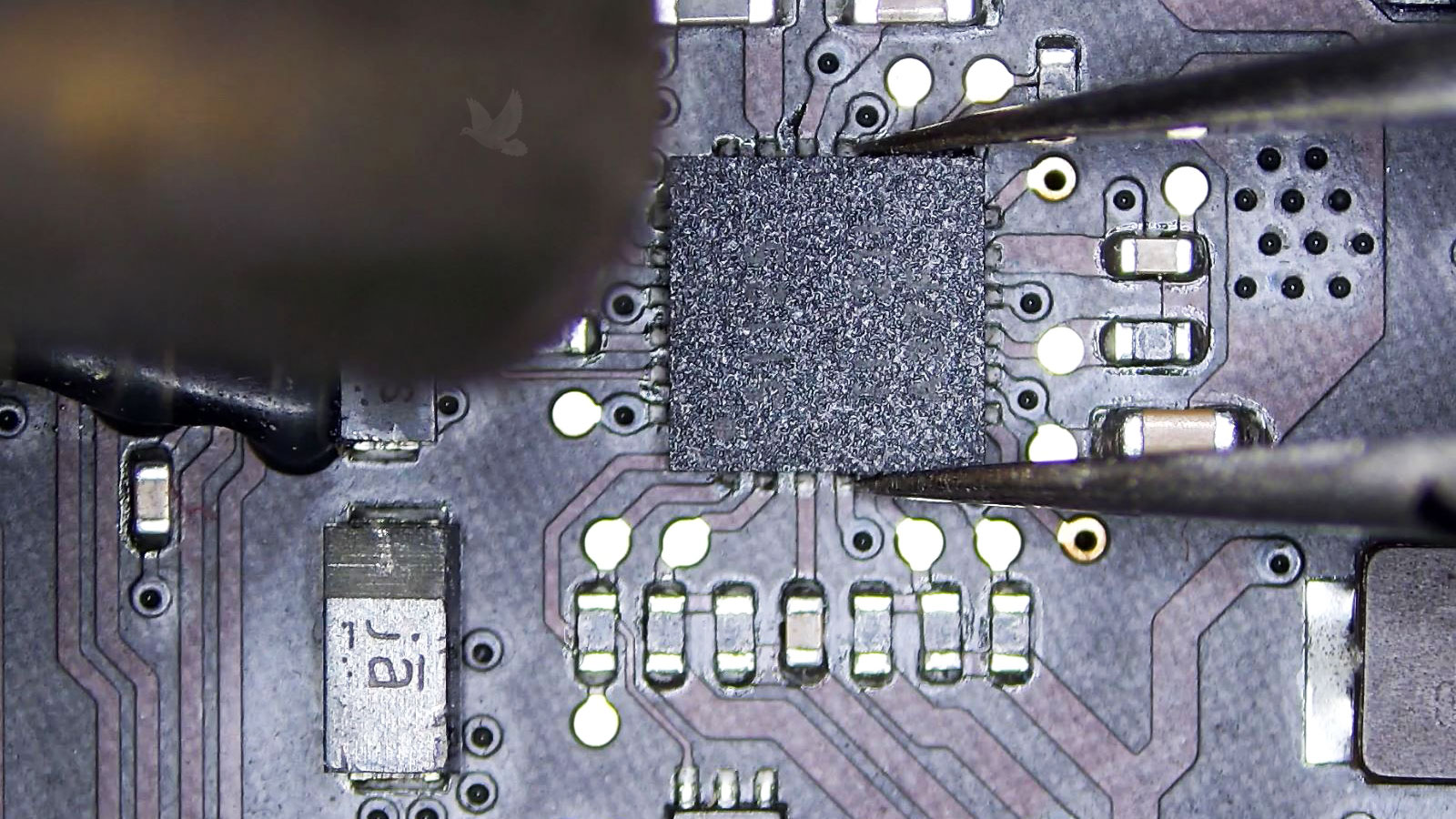
Component removal is performed only after diagnosis has narrowed the failure sufficiently to justify working directly on that area of the logic board.
Tiny Connections Can Determine Whether a Repair Succeeds
Beneath and around a logic board component are solder pads and conductive paths that connect it to the rest of the circuit. These connections can be extremely small, and their condition matters just as much as the replacement component itself. A damaged pad or broken trace can leave the circuit incomplete even when a new part has been installed correctly.
The area exposed after component removal provides an opportunity to inspect those connections directly. Pads that have separated from the board, damaged solder points, or interrupted traces need to be recognized before the replacement is installed. When a connection has been compromised, the repair may require reconstruction rather than simply adding more solder.
This is one reason logic board repair can become considerably more precise than ordinary part replacement. The objective is to preserve as much of the original circuitry as possible while restoring only the connections that no longer function correctly.
What the Repair Area May Require
A Repaired Circuit Needs to Prove Itself
Installing a replacement component or restoring a damaged connection does not by itself confirm that the original fault has been resolved. The repaired area can be measured again, followed by testing of the MacBook Pro as a complete system. This helps distinguish a technically completed soldering operation from a repair that actually restored the intended function.
Electrical conditions around the repaired area can be checked again and compared with the abnormal measurements that led to the repair. This helps confirm whether the short, missing voltage, interrupted connection, or other circuit-level fault has actually changed as expected.
The MacBook Pro can then be operated with attention to the function associated with the original board fault. Startup, charging, communication, or another affected behavior should operate consistently rather than merely working once immediately after the repair.
Continued operation provides another opportunity to identify intermittent behavior that a brief test may not reveal. A logic board repair should remain stable as the computer operates, changes power states, and performs the functions associated with the repaired circuitry.
The repair is complete when the corrected circuitry and the MacBook Pro agree that the fault is gone.
A Failed Logic Board Does Not Automatically Need to Be Replaced
When a MacBook Pro develops a board-level fault, the condition of the circuitry can be evaluated before deciding that the entire logic board is beyond repair. A failed IC, damaged power circuit, interrupted connection, or another isolated electrical problem may provide a more precise repair path when the rest of the board remains serviceable.
MacBook Pro logic board repair is available in Miami for problems that require electrical diagnosis and component-level work. The decision to repair can be based on what testing reveals about the board, allowing the actual failure to determine the work rather than replacing the complete assembly by default.
When Board-Level Help Makes Sense
Miami customers can arrange complimentary collection of the MacBook Pro and return delivery after the work is completed. For pickups beyond Miami, travel can still be coordinated, with any transportation charge based on the additional distance.