
Liquid Inside a MacBook Pro Can Keep Causing Damage After the Spill
A MacBook Pro exposed to liquid can continue changing internally even after the outside has been wiped dry. Moisture and residue can remain around connectors, ICs, capacitors, and other components on the logic board, creating electrical paths that were never intended to exist. What begins as a spill can therefore develop into corrosion, unstable circuits, or component failure.
The symptoms are not always immediate. A MacBook Pro may shut down at the time of the spill, continue operating with unusual behavior, or appear normal before problems emerge later. The amount of liquid visible from the outside does not reliably show how far it traveled internally or which circuits were affected.
What Matters Immediately After Exposure
Continued electrical activity can matter when liquid or conductive residue is still present. Avoiding repeated power attempts helps preserve the condition of affected circuitry until the MacBook Pro can be opened and inspected.
Corrosion and Residue Tell Part of the Story
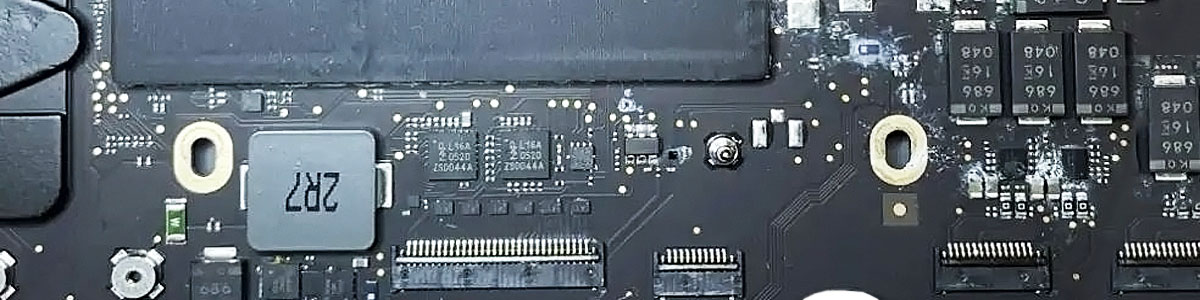
Once a MacBook Pro is opened, visible evidence around the logic board can help establish where the liquid traveled. Dried residue, discoloration, deposits around component pins, and corrosion near exposed metal can identify areas that deserve closer examination. The visible contamination is important, but it does not automatically reveal whether the components underneath are still electrically healthy.
The Board Has to Be Tested, Not Just Cleaned
Removing visible contamination can improve access to an affected area, but a clean-looking logic board is not proof that the circuits survived the exposure. Liquid can damage a component electrically without leaving an obvious mark, and corrosion can interrupt a connection that appears insignificant until measurements are taken.
Diagnosis therefore has to move from visual inspection to electrical testing. Measurements around the affected circuitry help determine whether expected electrical conditions are still present and where an abnormal condition begins.
Voltage rails associated with an affected area can be checked to determine whether power is present where expected. A missing or abnormal rail provides a direction for further testing instead of assuming that the most visibly corroded component caused the failure.
Conductive residue or a failed component can create an unintended low-resistance path. Resistance and related measurements can help identify a shorted rail and narrow the search to the circuitry connected to it.
Capacitors, resistors, ICs, and other surface-mounted parts in the liquid path may require individual evaluation. A component can fail electrically even when its package remains visually intact, so appearance alone cannot determine whether it should remain on the board.
Corrosion can interrupt tiny conductive paths, solder joints, and component connections. Continuity testing can help determine whether signals or power can still travel through an affected path rather than stopping at a damaged connection.
Board Damage Can Require More Than Removing Corrosion
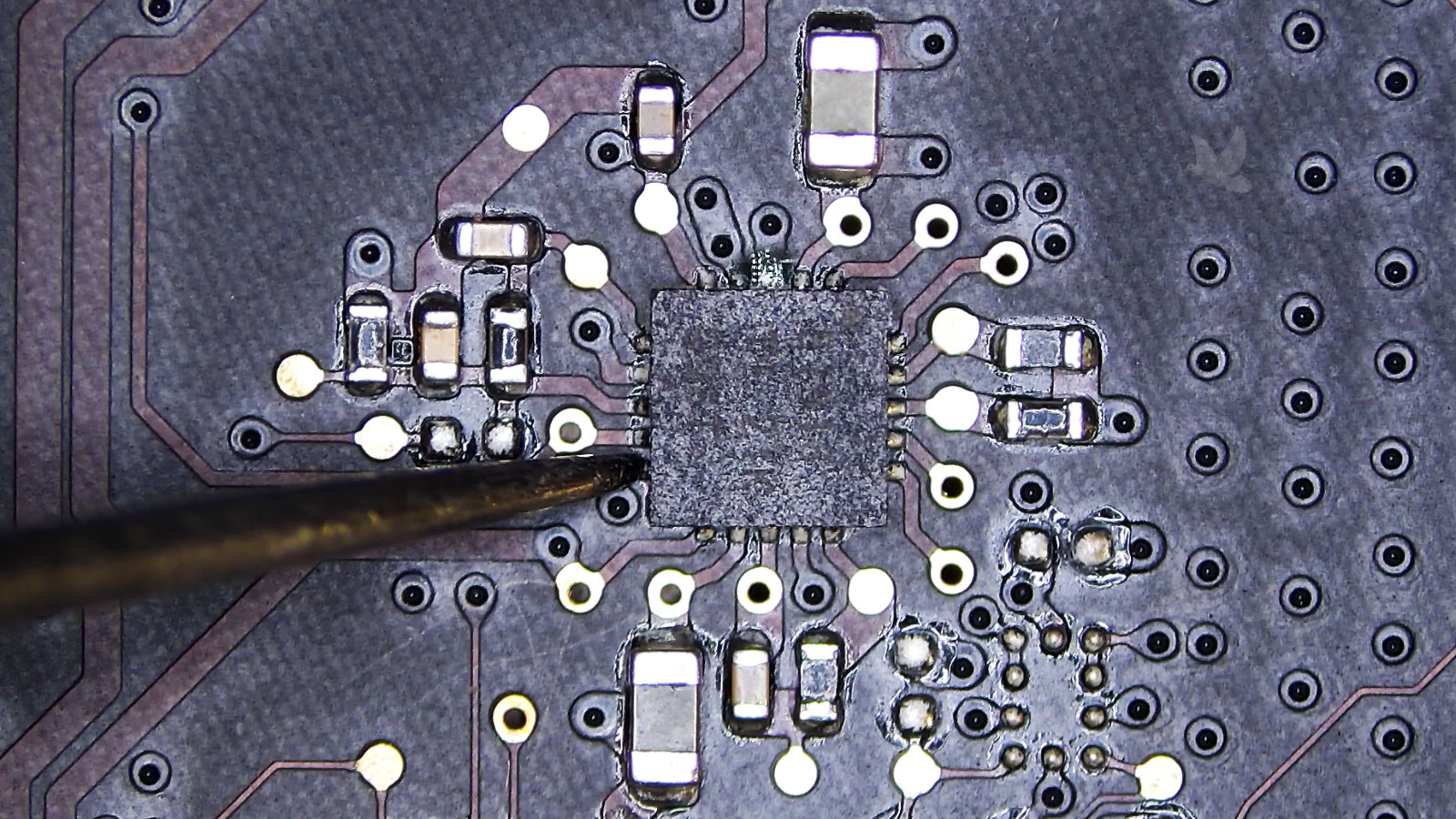
Liquid exposure can damage the electrical connections and components that make up a circuit. Once testing identifies an affected area, the repair has to address what the corrosion or electrical activity actually damaged. Depending on what is found, that can involve restoring a connection, replacing individual surface-mounted components, or working directly around an affected IC.
Expose the Affected Area
Contamination and unstable material around the repair area need to be cleared sufficiently to inspect solder joints, component terminals, and conductive paths underneath the visible residue more thoroughly.
Identify Failed Parts
Electrical measurements help separate components that remain functional from those that were damaged. This avoids replacing surrounding parts simply because they happened to be located near the spill.
Restore the Circuit
Failed capacitors, resistors, ICs, or other components can be replaced. Corroded solder joints or interrupted paths may also need component-level work to restore the intended electrical connection.
Verify the Repair
The repaired area is measured again before the diagnosis is considered complete. The objective is to confirm that the abnormal electrical condition has been corrected and that the affected circuit is behaving as expected.
The objective is not to make the logic board look clean. It is to make the damaged circuit electrically correct again.
The Most Visible Damage May Not Be the Only Damage
Liquid follows openings, surfaces, and small spaces inside a MacBook Pro. The area with the heaviest corrosion may show where contamination accumulated, but it does not necessarily show every place the liquid reached.
Moisture can migrate beneath shields, around connectors, under components, and into nearby sections of the logic board. Small deposits farther from the obvious spill area can therefore matter during inspection.
Follow the Evidence
Testing can extend outward from the visibly affected area when measurements or physical evidence suggest that another circuit may be involved. This keeps the investigation tied to what is actually found rather than assuming that every nearby component was damaged.
That distinction matters because a complete liquid-damage repair should address the affected path without turning the job into unnecessary replacement of unrelated parts.
Still Working Does Not Mean the Liquid Caused No Damage
Some MacBook Pros continue starting, charging, and operating after liquid exposure. That can create the impression that the spill caused no meaningful damage, especially when the keyboard, display, and trackpad appear to behave normally.
Internal conditions can tell a different story. Residue may remain around energized circuitry, and corrosion can develop gradually at component terminals or connections while the computer continues to function.
It Powers On
Normal startup can be reassuring, but it answers only one question.Power Does Not Reveal Board Condition
A MacBook Pro can complete startup while contamination remains elsewhere on the logic board. Circuits that are not preventing startup may still contain corrosion or residue capable of creating problems later.
Everything Seems Normal
Keyboard, trackpad, charging, and other functions may initially appear unaffected.Symptoms Can Develop Later
Corrosion does not have to produce an immediate failure. Changes at solder joints, component terminals, or conductive paths can progress after the original exposure and eventually affect a circuit that previously continued to operate.
This is why the decision to inspect a liquid-exposed MacBook Pro should not depend exclusively on whether it still turns on. The relevant question is whether liquid reached areas where contamination or corrosion remains capable of affecting the hardware.
Repairing the Failed Circuit Is Only Part of the Job
Once damaged circuitry has been repaired, the MacBook Pro needs to be evaluated beyond the specific area that received component-level work. Liquid exposure can produce faults that appear only under particular operating conditions, so the completed repair should be followed by functional checks that confirm the computer behaves consistently.
| Check After Repair | What It Helps Confirm |
|---|---|
| Startup and shutdown | The MacBook Pro can complete normal power transitions repeatedly without an immediate return of the original fault. |
| Battery and charging behavior | Power from the adapter and battery can be handled normally when the liquid exposure involved or approached related circuitry. |
| Keyboard and trackpad response | Input devices continue responding correctly when liquid may have traveled through the upper case or their connections. |
| Ports and connected devices | External connections associated with exposed areas can communicate and operate without intermittent behavior. |
| Extended operation | The MacBook Pro remains stable beyond a brief startup test, allowing inconsistent behavior to become apparent before the repair is considered complete. |
A successful liquid-damage repair should restore stable operation, not merely produce a successful power-on.
Liquid Damage Is Better Evaluated Before It Has More Time to Progress
A spill does not have to leave a MacBook Pro completely dead to justify inspection. Visible corrosion, unstable operation, charging problems, unexpected shutdowns, or simply knowing that liquid reached the computer can provide enough reason to examine what happened internally.
MacBook Pro liquid damage repair is available in Miami for systems requiring internal inspection, electrical diagnosis, corrosion-related repair, or component-level logic board work. The repair can be based on the damage actually found rather than assuming that every liquid-exposed MacBook Pro needs the same solution.