
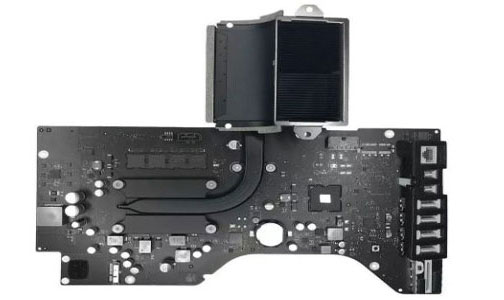
A logic board can be removed from the iMac when access to individual circuits and components is necessary for closer inspection, measurement, and repair.
When an iMac Failure Leads Back to the Logic Board
An iMac that will not start, loses a critical function, or behaves unpredictably can have a fault deeper than a replaceable drive, cable, or peripheral. The logic board brings together numerous power, control, communication, and processing circuits, so a failure within one area can affect the computer in ways that initially appear unrelated.
Finding that fault requires narrowing the problem beyond the conclusion that the motherboard is bad. A shorted component, damaged power rail, failed semiconductor, interrupted circuit path, or another localized electrical problem can sometimes be isolated to a specific area of the board rather than treating the entire assembly as a single failed part.
That distinction matters because identifying the defective circuit is what makes component-level logic board repair fundamentally different from simply replacing the motherboard.
A Dead Logic Board Does Not Identify the Failed Circuit
A board-level problem can interrupt the iMac at very different points in its operation. Instead of assuming that every nonfunctioning motherboard has the same defect, diagnosis can narrow the failure according to the electrical section involved and the behavior present at the computer.
Board-Level Diagnosis Becomes More Precise as the Fault Is Narrowed
A motherboard contains too many interconnected circuits to approach every failure by inspecting components at random. The useful path is to progressively reduce the area under suspicion until measurements point toward a particular circuit or component.
When a Storage Failure Reaches the Motherboard
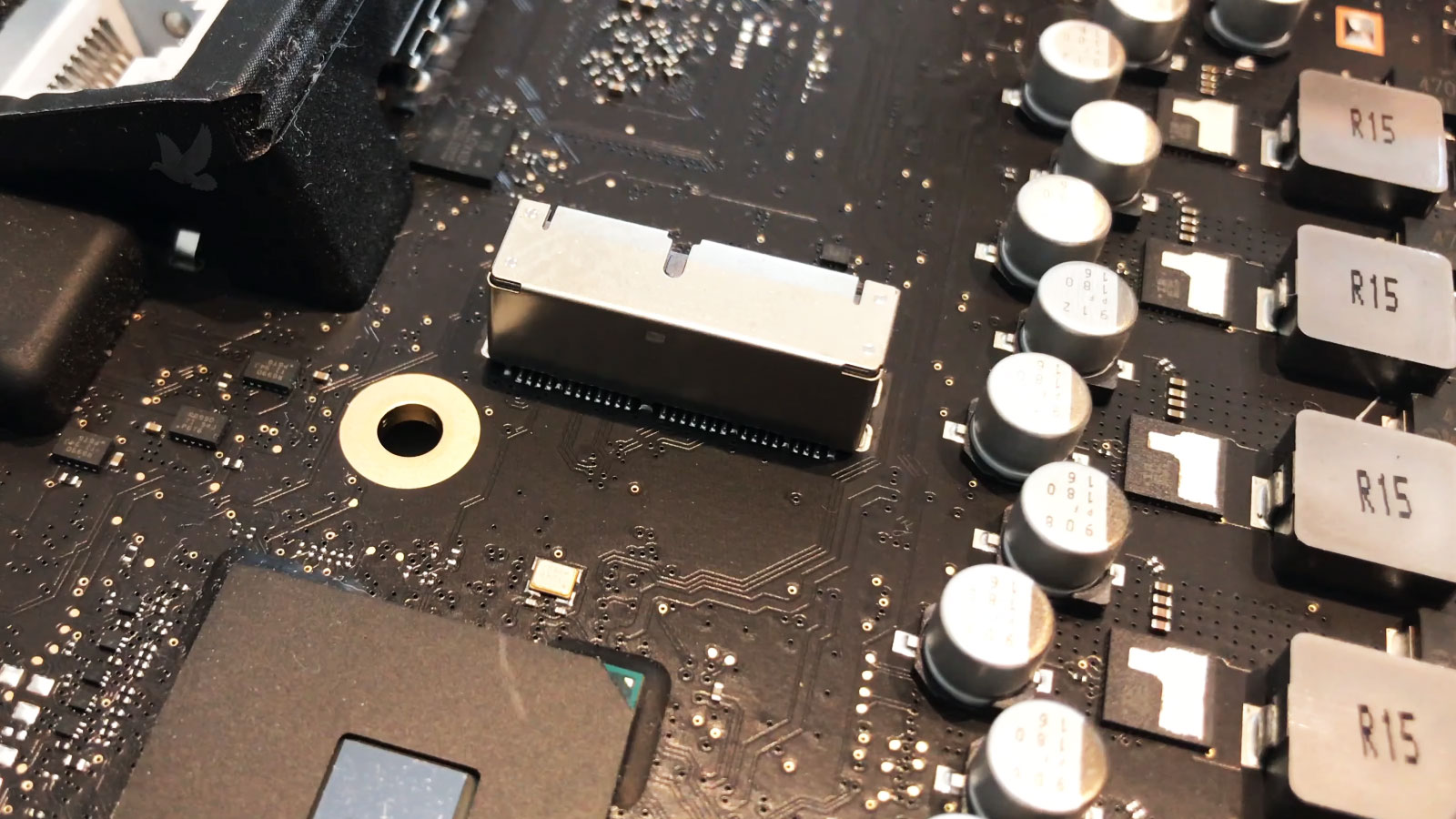
An M.2 SSD and the circuitry supporting it are electrically connected, which means a failure does not always remain confined to the storage device. In the board shown here, the area beside the M.2 connection contains MOSFETs, capacitors, and supporting circuitry being examined after a short developed around the SSD section.
The important question is where the electrical failure originated. A shorted SSD can potentially affect circuitry supplying it, while a fault on the motherboard can also expose the storage device to abnormal electrical conditions. Determining which components are shorted and how the affected circuit behaves helps establish what needs repair before another drive is connected.
Component-Level Repair Goes Beyond Replacing the Failed Part
Once a defective component or damaged circuit area has been identified, the repair still has to account for the board around it. Removing and installing very small components involves more than making a new part physically occupy the same location.
A Repaired Circuit Still Has to Prove Itself
Correcting the electrical fault is an important milestone, but it does not by itself establish that the iMac is ready for regular use. The repaired area needs to be checked in the context of the complete motherboard, where power sequencing, connected hardware, startup behavior, and sustained operation can reveal problems that a single measurement cannot.
The original failure provides the reference point. If the iMac previously would not power on, lost access to a device, developed instability, or failed only under certain conditions, testing should return to that behavior and determine whether it remains absent after the repair.
Verify
Measure first.
Operate next.
Confirm the result.
When the Fault Is on the Logic Board
iMac logic board repair service is available in Miami when diagnosis points to an electrical or component-level motherboard failure. Problems involving shorted circuits, failed MOSFETs or capacitors, damaged connections, interrupted board paths, and other localized faults can be investigated to determine whether the affected area can be repaired.
A board-level problem does not automatically mean that every component on the motherboard has failed. When the fault can be isolated, the repair can concentrate on the circuit responsible for the malfunction and then return to testing the iMac under the conditions associated with the original problem.