
A Computer May Pass Every Test Until Everything Works at Once
Testing one part of a computer at a time can produce reassuring results. Memory may complete a test without errors, storage may report normal health, the processor may operate correctly under a controlled load, and the graphics hardware may appear stable when examined separately.
The situation can change when those systems begin working together.
A demanding application, game, rendering task, large file operation, or other sustained workload can place simultaneous demands on processing, memory, graphics, storage, and the electrical systems supporting them. A weakness that remains hidden during an isolated test may become visible only when several parts of the machine are competing for resources and operating near their normal working limits.
That difference matters during diagnosis. Passing an individual component test does not necessarily prove that the complete computer is stable as a system. Reproducing the combination of activity that triggers the failure can reveal relationships that isolated testing never exposes.

Electronic Components Can Drift Before They Fail
Diagnosis often sounds binary: a component is good or it is bad. Real electronic behavior is not always that simple.
Resistors, capacitors, semiconductor devices, sensors, and other components are manufactured to operate within specified electrical ranges. Age, repeated heating and cooling, electrical stress, and deterioration can gradually change those characteristics.
A capacitor may lose capacitance or develop excessive internal resistance. A resistor can move away from its intended value. A semiconductor may continue functioning while its electrical behavior changes enough to affect the surrounding circuit.
The component may therefore pass a basic continuity check and show no obvious physical damage while still contributing to instability.
Finding this type of fault requires evaluating whether a component is behaving correctly within the circuit, not merely whether electricity can pass through it.
Some Circuits Are Supposed to Stay Apart
Different electrical sections can operate beside one another while remaining separated by design. Isolation helps prevent voltage differences, unwanted current, or disturbances in one part of a system from directly affecting another.
When that separation is compromised, the resulting symptoms may appear somewhere other than the damaged area.
A Fault Can Cross a Boundary It Was Never Supposed to Cross
Isolation inside electronic equipment can be created in several ways. Transformers can transfer energy without a direct conductive connection. Optocouplers can pass information using light. Other circuit designs separate grounds, signals, or power domains while still allowing controlled communication between them.
Damage to one of those boundaries changes how the sections interact.
An isolation component that begins leaking electrically, insulation that has deteriorated, contamination across a circuit board, or damage between previously separated conductive paths can introduce current where the design never intended it to flow.
The visible failure may then occur on the receiving side of the circuit even though the original defect exists somewhere across that isolation boundary. Diagnosis requires determining not only whether each section works independently, but also whether the electrical separation between them still behaves as designed.
A Circuit Does Not Have to Be Shorted to Be Overloaded
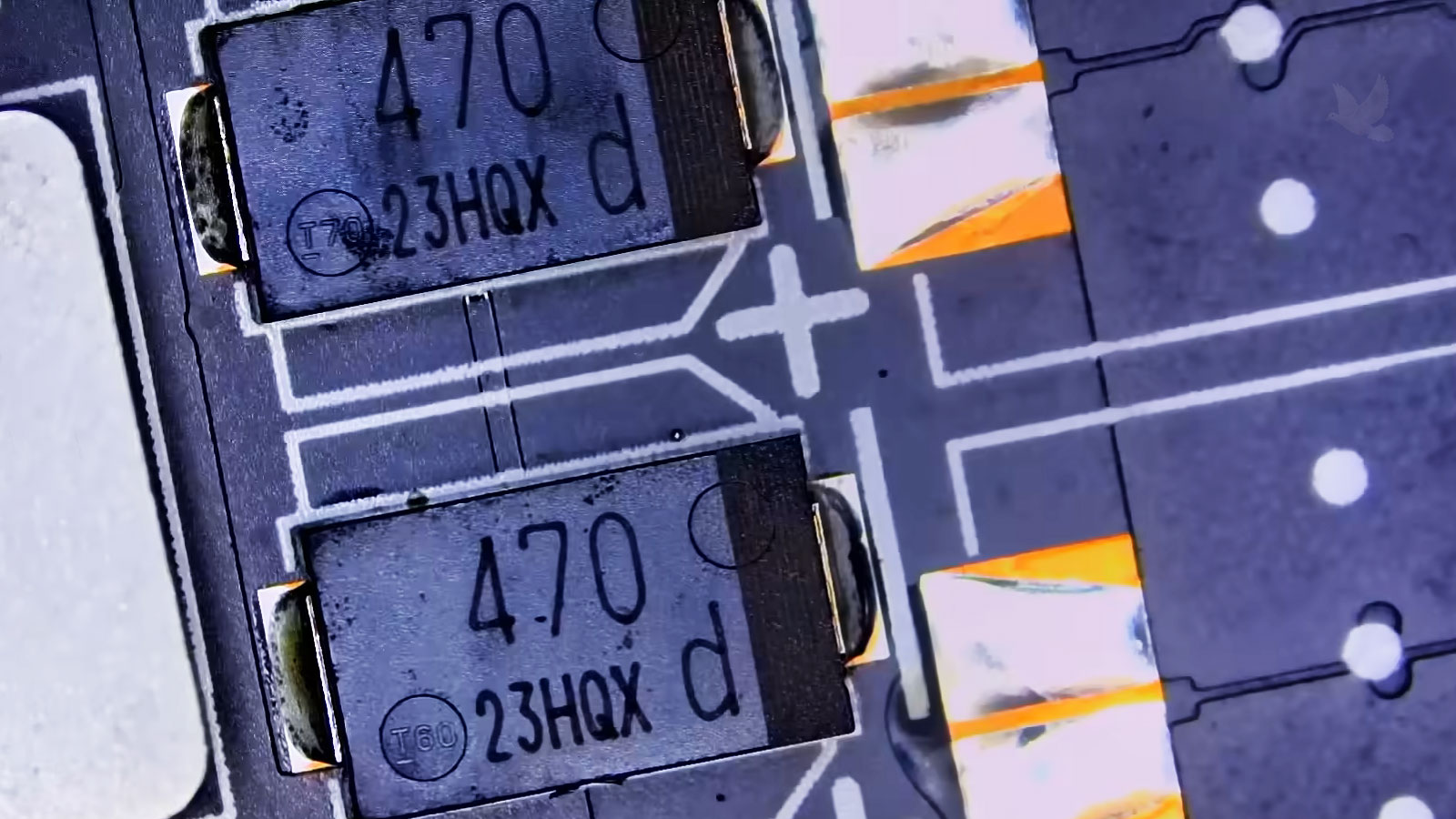
A direct short is only one way an electrical rail can be pulled out of its normal operating range. A component that has partially deteriorated can begin drawing more current than intended while still retaining enough resistance to avoid behaving like a conventional short circuit.
That additional load can affect everything sharing the same source.
Current Draw Changes the Diagnosis
Resistance measured while equipment is powered off provides useful information, but it does not describe every condition that develops during operation.
Observing what happens to voltage and current as a circuit becomes active can distinguish a normal low-resistance load from a component that is demanding more power than the circuit was designed to provide.
One Device Can Prevent an Entire Bus From Communicating
Inside a computer, many components do not communicate through dedicated connections used by only two devices. Several devices can share the same communication bus, with each participant expected to follow the electrical and timing rules of that interface.
When one device stops following those rules, the effect can extend well beyond that component.
The Hardware May Be Intact While Its Instructions Are Not
A device can be electrically functional and still behave incorrectly when the firmware stored inside it becomes corrupted, contains an unsuitable version, or fails during an update. Depending on the device, the result may be failed initialization, missing hardware, unexpected resets, limited functionality, or communication problems that resemble a physical defect.
This creates an important distinction during diagnosis: replacing components is not always the first meaningful test when the component itself may still be capable of operating normally.
Firmware work requires identifying the hardware precisely and determining what code belongs on that particular device and revision. An incorrect firmware image can introduce additional problems rather than correct the original one.
When firmware is suspected, the condition of the device, the integrity of the stored code, and the appropriate recovery method all need to be considered before attempting to rewrite it.
How a Component Is Mounted Can Affect How It Works
Mechanical pressure is necessary in several parts of a computer. A processor cooler must maintain firm contact, expansion cards need to remain properly seated, and brackets or retention systems keep components positioned where the design expects them to be.
Problems begin when that force is uneven, excessive, or applied in the wrong direction.
Too much mounting pressure can slightly distort a motherboard, processor socket, connector, or surrounding assembly. Uneven pressure can change contact across an array of pins or pads, allowing some electrical connections to remain reliable while others become marginal.
A failure caused this way may appear after hardware has been removed and reinstalled, after a cooler has been changed, or when the chassis places mechanical stress on the board. Comparing behavior before and after mounting pressure is changed can help separate an electrical component failure from a problem created by the way the hardware is physically assembled.
Tighter Is Not Always Better
Fasteners and retention hardware have a mechanical purpose, but additional force does not automatically improve electrical contact.
Correct seating, even pressure, and proper alignment matter more than simply tightening an assembly as far as possible.
You Do Not Need to Know Which Part Failed
A computer problem does not have to arrive with a technical explanation. What happened immediately before the failure, what was running at the time, whether the machine restarted or simply stopped responding, and what changed afterward can all provide useful diagnostic information.
That uncertainty is something we can work with. If you are in Opa-locka and know that the computer is no longer behaving normally, we can take it from there without expecting you to identify the component, circuit, or electrical condition responsible for the failure.
From there, testing can move from the visible symptom toward the condition responsible for it, whether the problem appears only under combined workloads, involves an abnormal electrical load, disrupts communication between devices, or originates somewhere less obvious.
When the Problem Needs More Than a Simple Answer
Difficult computer failures are exactly where a more thorough diagnosis earns its value. Instead of spending money on parts that may not solve the problem or continuing to use a machine whose behavior cannot be trusted, you can bring the system to us for a closer technical examination.
Our Opa-locka service gives you a practical next step when the usual answers have not been enough. We can determine what the repair actually requires and give you something much more useful than another guess.