

Sometimes the Computer Shuts Down Because It Thinks It Has To
Computers contain protection circuits designed to react before electrical or thermal conditions become severe enough to damage hardware. Current monitoring, temperature sensing, voltage supervision, and other feedback systems continually influence whether the machine is allowed to keep operating.
That protection is important, but the signal causing the shutdown is not always proof that the condition being reported actually exists. A damaged sensor, incorrect reference voltage, failing monitoring circuit, poor connection, or abnormal signal reaching a controller can make otherwise functional hardware appear unsafe.
The result can be a computer that starts normally and shuts off seconds later, powers down only during particular workloads, or repeatedly stops even though temperatures and major supply voltages initially appear reasonable.
In that situation, replacing the component that seems to be overheating or drawing too much power may accomplish nothing. The diagnostic question becomes whether the computer is responding to a genuine dangerous condition or to incorrect information being produced somewhere inside the monitoring and protection system.
Not Every Important Voltage Powers a Component
When checking a computer electrically, attention naturally goes to the voltages that supply the processor, memory, storage devices, graphics hardware, and other major components. But electronic circuits also depend on much smaller reference voltages whose purpose is not to provide operating power.
A reference voltage gives another circuit a known electrical value against which something can be measured or controlled. Controllers may use these references to interpret sensor information, regulate an output, determine whether a voltage is within an acceptable range, or decide when a particular condition has been reached.
If the reference itself becomes inaccurate, the circuit using it can make the wrong decision even though the quantity it is attempting to measure is perfectly normal.
Ground Is Part of the Circuit, Not Just a Common Connection
Voltage is meaningful only in relation to another electrical point. Throughout a computer, ground provides the return path and reference that allows power circuits, control signals, and digital communication to operate as intended.
When a ground connection develops excessive resistance or becomes compromised, current may still flow and the computer may still power on. The problem is that different areas of the system may no longer share the electrical reference they are supposed to have.
Order Matters
A motherboard does not energize every circuit simultaneously. One stage can depend on confirmation from an earlier stage before the startup process is allowed to continue.
Having All the Right Voltages Is Not Enough
A computer passes through an electrical sequence from the moment power becomes available. Standby circuits operate first, control signals change state, additional voltage rails are enabled, and different areas of the motherboard become active as earlier conditions are confirmed.
This sequence allows the system to establish that one stage is ready before depending on it for the next. If an enable signal arrives too late, a power-good condition is never recognized, or one rail rises incorrectly, initialization can stop even when measurements later show that the expected voltages are present.
That creates an important diagnostic distinction. A meter can show normal voltage after the power button is pressed without revealing what happened during the milliseconds when the motherboard was attempting to start.
A system that briefly turns on and immediately stops, repeatedly cycles through startup, or never progresses into normal initialization may require examining when different rails and control signals appear, not merely whether they eventually appear.
In those cases, the sequence itself becomes part of the fault.
A Circuit Board Can Change When It Bends
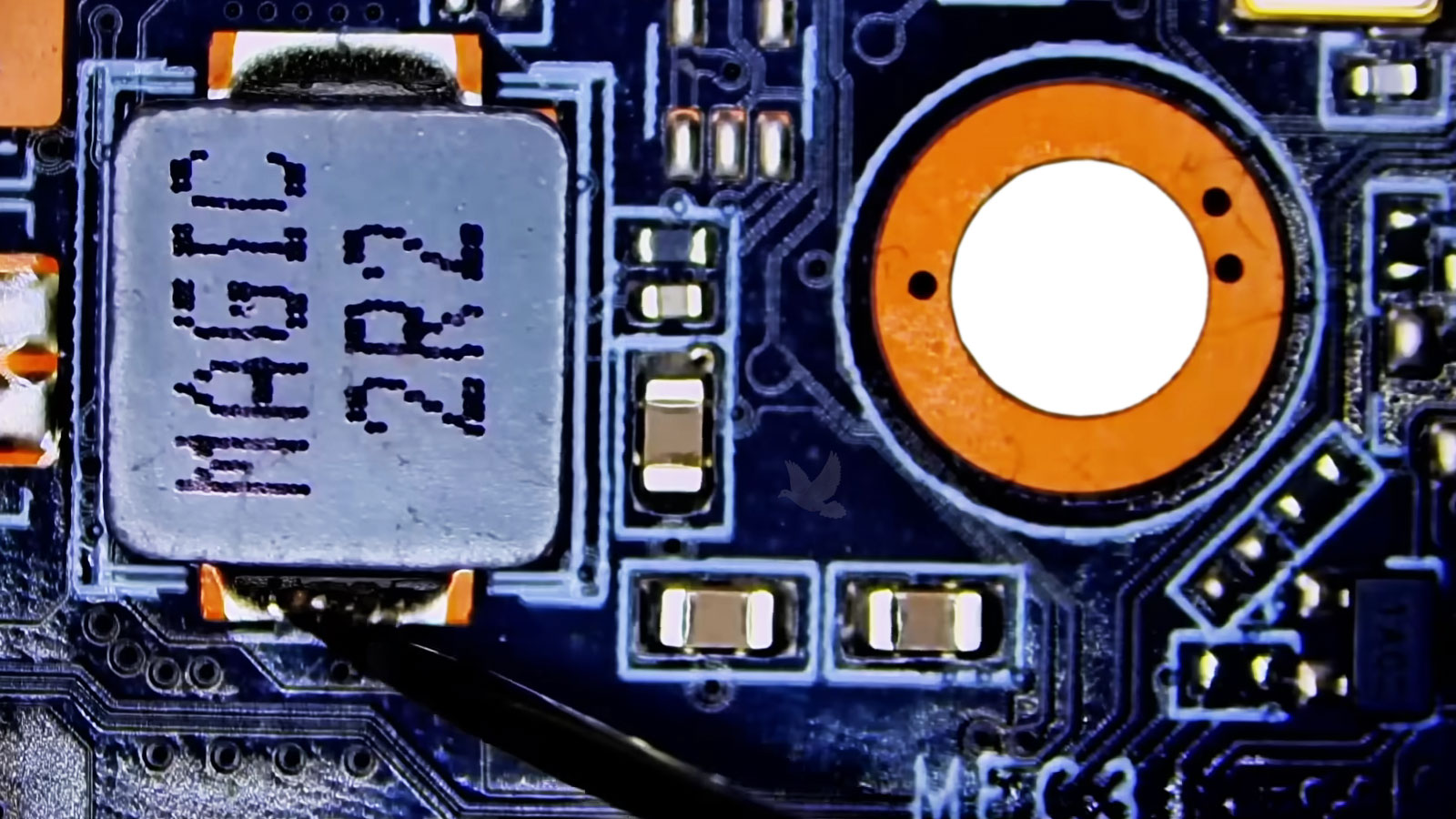
Motherboards and graphics cards may look rigid, but their circuit boards can flex slightly from mounting pressure, heavy components, heatsink tension, repeated heating and cooling, or physical forces transmitted through the chassis.
A small amount of movement does not necessarily leave a visible crack. Instead, it can affect a marginal solder connection, component termination, via, or internal conductive path that was already close to failing.
This can produce unusual symptoms because the electrical condition changes with the physical position of the board. A system may operate after being moved, fail after reassembly, react when mounting screws are tightened, or behave differently as the board reaches operating temperature.
The important clue is repeatability. When carefully controlled mechanical pressure changes an electrical symptom, the movement itself can help identify which area of the circuit deserves closer examination. That does not mean flexing a board is a repair; it means the reaction can provide diagnostic information about a connection that otherwise appears normal.
Some Circuits Can Have Power and Still Never Begin Working
Applying the correct voltage to an electronic circuit does not guarantee that it has everything required to operate. Certain devices also depend on an oscillator that continuously establishes timing.
A damaged crystal, defective oscillator circuit, compromised supporting component, or missing clock output can leave the affected electronics powered but unable to perform their intended function. Depending on where that timing source is used, the result may appear as failed initialization, missing communication, an unresponsive controller, or hardware that seems completely dead.
This creates a diagnostic situation in which ordinary voltage measurements can look surprisingly normal. Supply rails are present, obvious shorts may be absent, and replacing the device that appears unresponsive may not change anything.
Examining whether the required oscillation actually exists can reveal the distinction between a component that has failed internally and a component that is simply waiting for a timing signal that never arrives.
A Voltage Can Measure Correctly and Still Be Electrically Dirty
A multimeter is excellent for determining whether a voltage is present and approximately where it should be, but that number does not describe everything occurring on the line.
Power circuits are expected to produce reasonably stable outputs. When filtering components deteriorate or regulation becomes unstable, unwanted ripple, spikes, or high-frequency noise can ride on top of an otherwise normal-looking voltage.
A rail expected to measure 5 volts, for example, may still average very close to 5 volts while rapidly fluctuating around that value.
Finding this type of problem can require looking at the electrical waveform rather than relying only on its average measurement. The objective is not simply to confirm that power exists, but to determine whether the power reaching sensitive electronics is sufficiently stable for them to operate correctly.
The Failed Function and the Failed Circuit May Be Two Different Things
When one part of a computer stops working, it is natural to begin with the hardware associated with that function. No video suggests graphics hardware. A device that disappears suggests the device itself. A computer that will not start points attention toward the components involved in startup.
Those are reasonable starting points, but they do not establish where the fault originates.
A component can stop functioning because another circuit is no longer supplying something it depends on. Missing control signals, incorrect voltage conditions, unstable timing, damaged supporting components, or faults elsewhere along the electrical path can all make functional hardware appear defective.
This distinction becomes especially important when replacing the obvious component does not correct the problem. At that point, continuing to exchange parts can become both expensive and misleading.
This is where a deeper level of repair can make the difference. We can trace the conditions the affected hardware depends on and determine whether the failure actually belongs to that component or originates somewhere else in the circuitry supporting it. For Miami Shores computer owners, this provides an alternative to continuing with part replacements that may never reach the real problem.
When the Obvious Answer Does Not Solve the Problem
A computer does not need to arrive with a known diagnosis. Unexpected shutdowns, unusual startup behavior, unexplained instability, failed functions, or a repair that did not correct the original problem can all provide a starting point for evaluation.
The objective is to identify the condition responsible for the failure before deciding which component or circuit actually requires attention.