
When a Laptop Motherboard Problem Requires Board-Level Repair
Laptop motherboard problems can affect nearly every part of the computer because the board connects and controls the components responsible for power, charging, storage, memory, display output, and communication between internal devices.
A motherboard fault does not always mean the entire board has failed. Problems can develop within individual power circuits, damaged components, connectors, traces, or other localized areas of the board. Careful electrical testing helps narrow the fault before deciding what type of repair is appropriate.
Laptop motherboard repair in Miami can involve tracing voltages, checking resistance, testing components, and examining suspicious areas of the circuit to determine why the laptop is not operating normally. The objective is to identify the actual electrical fault rather than replacing parts without first establishing what has failed.
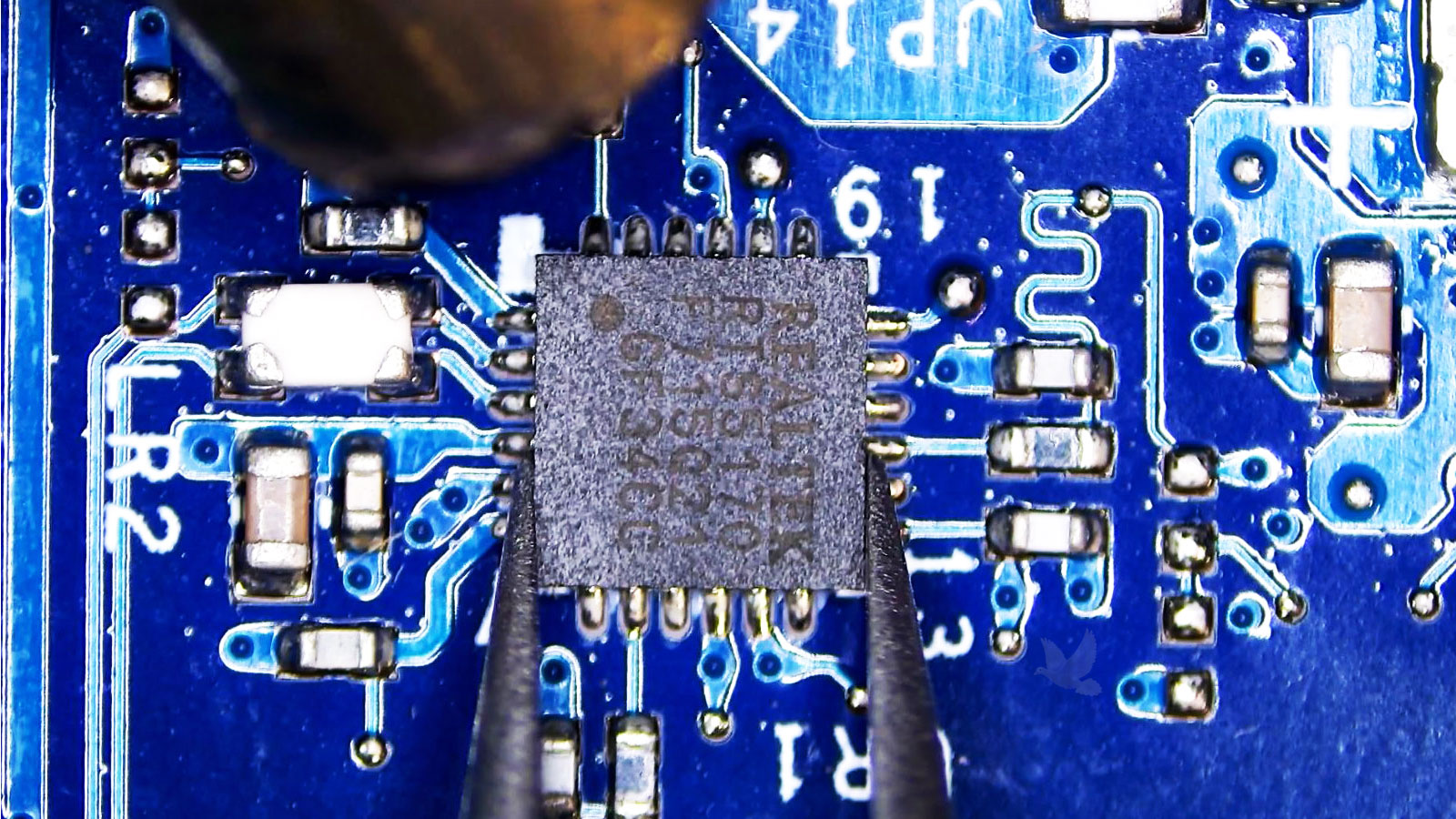
Motherboard Diagnosis Starts With What the Circuit Is Doing
Input Voltage
Many laptop power adapters supply around 19 volts. Verifying whether expected input power reaches the motherboard provides an early reference point when tracing a no-power or charging fault.
Standby Rail
Low-voltage standby rails are important during the startup sequence. A missing or unstable rail can help direct testing toward the circuit responsible for generating or distributing that voltage.
Power Rail
Five-volt circuitry is common across laptop motherboards. Checking whether a rail is present, absent, or being pulled down can provide another clue when narrowing an electrical failure.
Shorted Rail
An unusually low resistance reading can point toward a shorted path that deserves further investigation. The expected resistance depends on the particular circuit, so the measurement has to be interpreted in context.
A Motherboard Fault Has to Be Narrowed Down Before It Can Be Repaired
Confirm the Power Path
Testing can begin around the input and power-distribution stages to determine whether voltage is reaching the board and where expected power stops progressing through the circuit.
Isolate the Faulty Area
Resistance, voltage, and component measurements can help narrow the problem to a particular rail or section instead of treating the entire motherboard as one failed component.
Verify the Repair
After the affected circuit is addressed, measurements and functional testing help confirm that the repaired area is behaving normally and the original symptom has been resolved.
Some Motherboard Failures Can Be Isolated to Specific Components or Connections
A failed capacitor, MOSFET, controller, charging component, or other board-mounted part can disrupt a circuit without making every other section of the motherboard defective. Once testing identifies the affected area, the individual components around that circuit can be examined more closely.
Broken solder joints, damaged pads, connectors, and other physical connections can interrupt power or signals between otherwise functional parts of the board. Repair may involve restoring the affected connection rather than replacing the motherboard as a complete assembly.
A damaged copper path can prevent voltage or signals from reaching another part of the circuit. When the location and function of that path are identified, continuity may be restored at the affected area as part of the board-level repair.
A Failed Circuit Does Not Automatically Mean a Failed Motherboard
The board contains many separate circuits and thousands of individual connections. A fault affecting one area does not establish that every other part of the motherboard has failed.
That distinction is important during diagnosis. Identifying the specific section responsible for the symptom helps determine whether localized board-level work is practical before treating complete motherboard replacement as the only option.
The Part That Stops Working May Not Be the Part That Failed
A laptop can lose charging, display output, USB functions, keyboard response, or another feature even when the device associated with that symptom is still functional. The failure may originate farther back in the circuit that supplies power, enables communication, or controls that function.
Following the electrical path helps separate the visible symptom from its underlying cause. That can prevent a working part from being replaced simply because it was the first component associated with the problem.
The symptom identifies where the problem appears. Testing helps identify where the problem actually begins.
One Symptom Can Lead Testing Somewhere Else
Board-Level Repair Can Involve More Than One Type of Correction
Component Replacement
A failed capacitor, MOSFET, controller, or other board-mounted component can be replaced when testing identifies it as part of the electrical fault.
Connection Repair
Damaged solder joints, pads, and component connections can interrupt otherwise functional circuitry and may need to be restored at the affected point.
Trace Restoration
A broken copper path can prevent power or signals from reaching another part of the board. Restoring continuity can reconnect the affected points in the circuit.
Connector Repair
Damage around a motherboard connector can interfere with the hardware attached to it, requiring attention to the connector, its contacts, or the surrounding board area.
Repairability Depends on What Failed and What Condition the Board Is In
Motherboard replacement can be appropriate when damage is extensive, the board itself is impractical to repair, or multiple critical areas have been compromised. But a laptop that has stopped working does not automatically require an entire replacement board.
When the fault can be isolated to a specific circuit, component, connection, or damaged path, board-level repair may address the problem while retaining the original motherboard. The decision depends on what testing reveals rather than the symptom alone.
The question is not simply whether the motherboard works. It is whether the failure can be identified and repaired at the board level.
When the Fault Is on the Motherboard, Finding It Comes First
Laptop motherboard repair in Miami can involve much more than replacing a complete board. Electrical measurements, circuit tracing, component testing, and physical inspection can help identify whether a failure originates in a power section, damaged component, connection, trace, connector, or another part of the motherboard.
Once the fault has been narrowed down, the condition of the affected circuitry can determine what type of repair makes sense. The goal is to address the problem that testing actually identifies rather than assuming that every motherboard-related symptom requires the same solution.