
When a MacBook Pro Trackpad Stops Responding Correctly
A MacBook Pro trackpad is used constantly for pointer movement, clicking, scrolling, gestures, and navigating through macOS. When its response becomes inconsistent, everyday control of the computer can quickly become frustrating. The pointer may stop moving normally, clicks may fail to register, gestures can become unreliable, or the trackpad may stop responding altogether.
Accurate diagnosis separates a failed trackpad from problems involving its cable, connection, or surrounding hardware before replacement is considered.
The Trackpad, Cable, and Connection All Matter
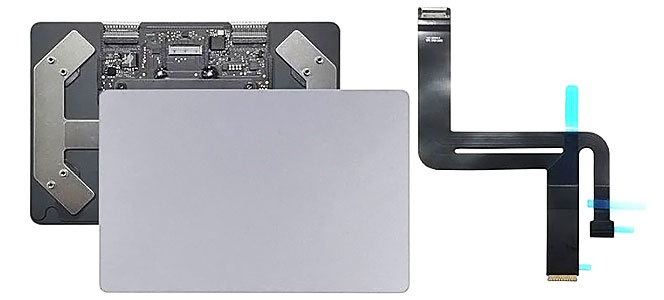
A trackpad problem does not automatically mean that the visible touch surface itself has failed. The assembly communicates with the MacBook Pro through its connection and flex cable, making those parts relevant when determining why trackpad input is missing or unstable.
Physical condition also matters. Wear, liquid exposure, internal damage, connection problems, or pressure from components beneath the palm-rest area can produce symptoms that initially appear to be a simple trackpad failure.
How the Trackpad Behaves Provides Useful Clues
Two MacBook Pros with trackpad problems can behave very differently. Paying attention to what still works, what has stopped working, and whether the problem changes during use can help distinguish between different types of trackpad failure before parts are replaced.
The pointer may continue responding normally even though physical clicking has become difficult or no longer works. This distinction matters because movement and click behavior do not necessarily fail together, and the mechanical condition of the trackpad deserves attention when the surface no longer feels or responds normally.
A trackpad may still recognize a click while pointer movement, scrolling, or gestures become intermittent. When different input functions behave inconsistently, the pattern provides more information than treating the entire trackpad as simply working or not working.
Input that disappears and returns can point toward an unstable condition rather than a completely failed assembly. Trackpad response can be observed during normal operation and after the MacBook Pro has been moved or restarted to determine whether the behavior follows a repeatable pattern.
When movement, clicking, and gestures are all absent, the trackpad itself is only one possibility. Its flex cable, connection, surrounding condition, and communication with the rest of the MacBook Pro need to remain part of the evaluation before the failure is assigned to a single component.
The exact symptom matters because not every trackpad failure begins, behaves, or needs to be corrected in the same way.
A Trackpad That Feels Different May Be Telling You Something
Trackpad problems are not limited to electronic response. A change in the way the surface feels when pressed can provide an important physical clue. Clicking may become unusually stiff, one portion of the trackpad may feel different from another, or the surface may no longer sit as it normally does within the palm-rest area.
Those changes deserve attention because the trackpad occupies a tightly fitted area inside the MacBook Pro. Pressure from beneath the assembly can interfere with its normal movement even when the trackpad itself was not the component that originally developed the problem.
A swollen battery is one condition that can create upward pressure beneath the trackpad area. In that situation, treating the symptom as an ordinary trackpad replacement would overlook the physical condition responsible for the change.
The surrounding area therefore matters during evaluation. The trackpad should be considered together with its mounting position, available clearance, and anything beneath it that could be altering its normal operation.
When the trackpad has physically shifted or clicking has become unusually difficult, forcing it repeatedly is not a useful test. The reason for the change should be identified first.
The Flex Cable
The trackpad depends on its flex cable to carry communication between the assembly and the MacBook Pro. Damage, deterioration, or an unstable connection along that path can interfere with input even when the trackpad surface itself appears perfectly normal.
Because the cable is part of the signal path, replacing the trackpad without considering its connection can leave the original symptom unresolved.
A Working Trackpad Depends on a Complete Connection
Every movement, click, and gesture detected by the trackpad has to be communicated beyond the surface being touched. That makes the electrical path between the trackpad and the rest of the MacBook Pro an important part of diagnosis when input becomes intermittent or disappears completely.
The condition of the flex cable can be examined along with the points where it connects. A cable that has been damaged, improperly seated, or compromised around its contacts can produce behavior that resembles failure of the trackpad assembly itself.
Connector condition matters as well. Contamination, physical damage, or a poor contact at either end can interrupt communication even though neither the trackpad nor the cable presents an obvious problem from the outside.
Evaluating the complete path helps determine whether the repair belongs at the trackpad, the cable, its connection, or farther along the circuit rather than replacing parts solely because the symptom appears at the trackpad.
The part receiving the touch is only one piece of the input path.
The Connectors
Both ends of the connection need reliable contact. A connector can look intact at first glance while still requiring closer inspection when trackpad communication is unstable or completely absent.
When connector damage is involved, identifying it before another trackpad is installed prevents a new assembly from being expected to correct a problem elsewhere in the connection.
When the Problem Continues Beyond the Trackpad
A responsive trackpad depends on more than the assembly beneath the fingertips. Once the trackpad, flex cable, and their connections have been evaluated, a remaining input failure can require following the circuit farther into the MacBook Pro.
A Replacement Trackpad Has to Fit and Function Correctly
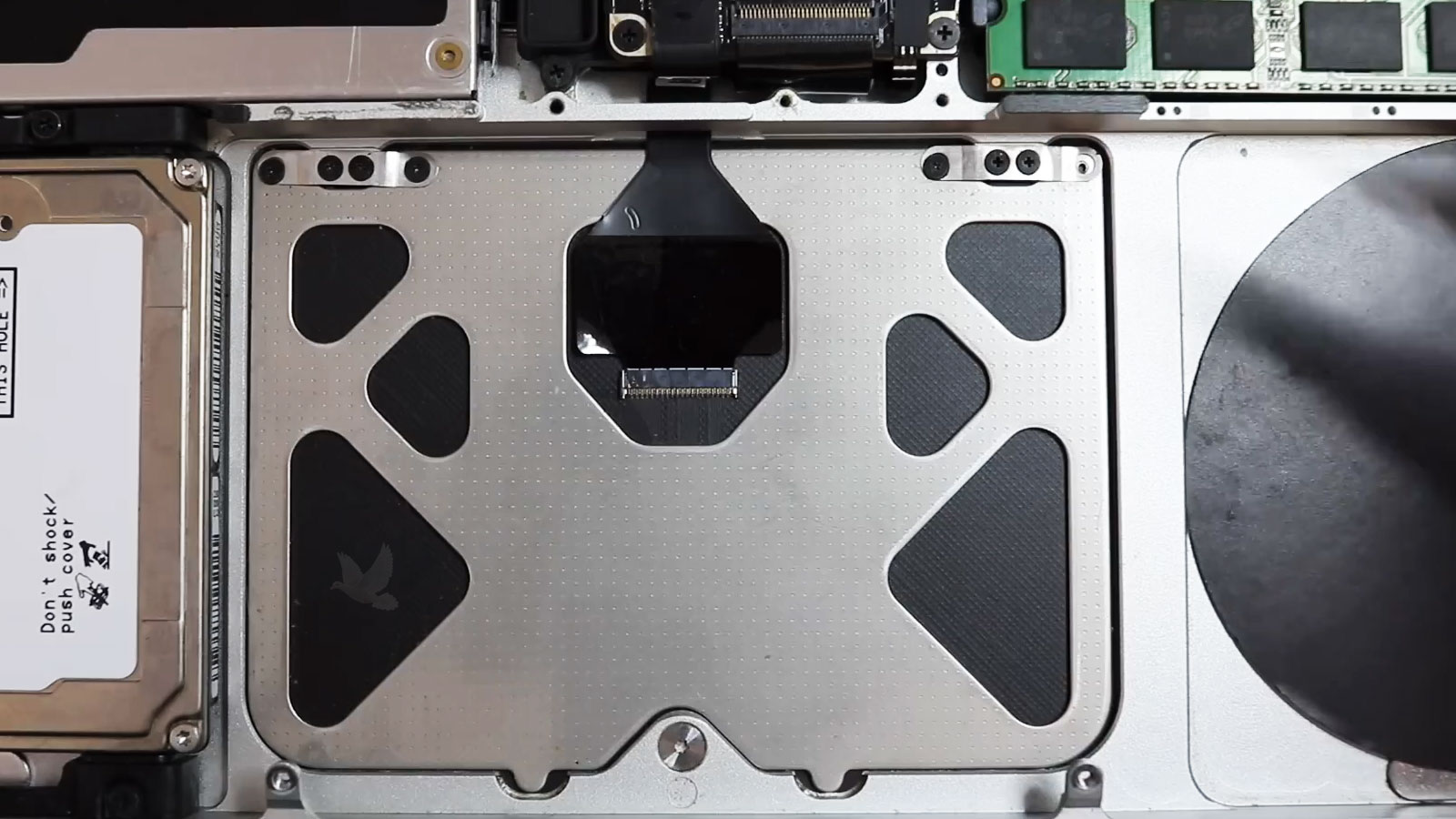
Replacing a failed trackpad involves more than placing another assembly into the opening. Its position, mounting, cable connection, and physical movement all contribute to how the finished repair feels and responds. A new component should restore normal operation without introducing a different mechanical or input problem.
Correct Position
The replacement needs to sit properly within the palm-rest opening so its surface remains correctly positioned relative to the surrounding enclosure.Alignment Affects the Finished Feel
An assembly that does not sit evenly can change the way the trackpad feels during use. Position and clearance should therefore be checked as part of the installation rather than judged only by whether pointer movement returns
Secure Mounting
The trackpad must remain stable in its intended position while still retaining the movement required for normal operation.Stability Without Interference
Mounting points and hardware should hold the assembly correctly without creating unwanted pressure or an uneven condition across the trackpad surface.
Cable Connection
The replacement assembly still depends on a reliable electrical connection through the trackpad flex cable and its corresponding connectors.The New Part Needs a Clean Signal Path
A poorly seated or compromised connection can make a functional replacement appear defective. The cable path and connector engagement should be correct before the installation is considered complete.
Normal Response
The finished repair should restore the expected relationship between touch, movement, clicking, scrolling, and gesture input.Test More Than Pointer Movement
Clicking and supported gestures should be checked along with ordinary pointer control so the replacement is evaluated across the functions the user actually depends on.
A Trackpad Repair Should Hold Up Beyond the First Click
Seeing the pointer move immediately after a repair confirms only part of the result. The trackpad is an interactive surface used through many different motions, pressures, and gestures, so its behavior should remain predictable as those functions are exercised together.
Testing also provides an opportunity to notice subtle differences that a simple power-on check could miss. A click that feels different near one edge, intermittent movement, or a gesture that repeatedly drops out can indicate that something still deserves attention before the MacBook Pro returns to normal use.
The repaired trackpad should become something the user no longer has to think about while operating the computer.
What Normal Operation Should Demonstrate
| Function | What to Confirm |
|---|---|
| Pointer control | Movement follows finger input smoothly without unexpected interruptions or jumps. |
| Clicking | Click response remains consistent across the usable surface without abnormal resistance. |
| Scrolling | Two-finger scrolling responds continuously and in the expected direction. |
| Gestures | Supported multi-touch gestures register consistently rather than working only intermittently. |
| Surface feel | The trackpad remains even and stable without an unusual raised area or change in movement. |
| Continued use | Normal response remains consistent after the MacBook Pro has been used beyond the initial test. |
When those behaviors remain consistent together, the repair has restored more than basic input. It has returned the trackpad to the role it is supposed to have during everyday control of the MacBook Pro.
Get the Trackpad Working Normally Again
From an Unresponsive Surface to a Complete Repair
MacBook Pro trackpad service in Miami can address problems ranging from abnormal clicking and intermittent input to a trackpad that has stopped responding completely. The repair can begin with the behavior of the computer rather than assuming that every trackpad symptom requires the same replacement.
When the assembly itself has failed, replacement can restore the physical and input functions expected from the trackpad. When the fault lies with the flex cable, connector, mounting condition, pressure beneath the assembly, or an electrical path beyond the trackpad, attention can remain on the actual source of the problem instead.
This distinction is especially important when a previous replacement has not corrected the symptom. Following the input path and physical condition of the assembly provides a more useful direction than repeatedly changing the same part.
Within Miami, collection and return of the MacBook Pro can be included with the service at no additional charge. For locations farther away, pickup and return can still be coordinated, with only the additional travel expense taken into account.